IATF 16949 Compliance: How We Guarantee Quality for Every Batch of Automotive Connectors
In the quality battlefield of the automotive supply chain, traders are at a turning point, redefining their value. As a pioneer of IATF 16949 compliant supply chain solutions, Suzhou Suqin Electronic has successfully transformed the trading process into a critical quality assurance node through its proprietary Three-Dimensional Quality Protection System. Data shows that customers utilizing this system save an average of 32.7% in supplier management costs while achieving an industry-leading 99.8% batch delivery qualification rate. This comprehensive system encompasses: a dynamic supplier rating mechanism based on process audits, an inbound inspection matrix integrating PPAP and AQL standards, and a transparency platform covering traceability from raw materials to logistics. Particularly in the New Energy Vehicle (NEV) connector sector, our precision CMM data comparison has successfully intercepted 17 batches of products with critical dimension deviations, preventing nearly ten million in potential recall losses for customers. This article deeply analyzes how these three quality protection layers work synergistically, revealing the indispensable technical value of the trader in the automotive supply chain.
I. IATF 16949 Compliant Supplier Qualification System
As the crucial gatekeeper for the automotive connector supply chain, Suzhou Suqin Electronic’s qualification system comprises three progressive quality control dimensions (See Figure 1), operating strictly in accordance with IATF 16949 standard clause 8.4.2 for the management of external providers.
1. Supplier Scorecard: Systematic Evaluation from FMEA to Control Plan
The nine-dimensional scoring system implemented in the initial screening phase covers three key quality elements:
- Process Stability: Evaluating the depth of the supplier’s PFMEA implementation based on APQP documents, focusing on the accuracy of special characteristic identification.
- Defect Prevention Capability: Auditing the Control Plan to verify the coverage of SPC (Statistical Process Control) application in key processes (requiring ≥95%).
- Traceability Effectiveness: Checking the traceability system’s ability to locate raw material batches and production process data within 15 minutes.
Supplier audit data from 2023 shows that manufacturers filtered through this system achieved a First Article Inspection (FAI) Pass Rate of 92.3%, an increase of 27 percentage points over the industry average.
2. Dual-Level Certification: Factory Qualification and Technical Capability Verification
The certification process adopts a graded verification model:
| Certification Level | Verification Content | Passing Standard |
| Level 1 Certification | IATF 16949 Certificate Validity | Certificate is within the validity period and has no major non-conformities. |
| Level 2 Certification | On-site Process Audit (VDA 6.3 Standard) | Total score ≥ 80 points, and P6/P7 single item ≥ 75%. |
This dual-level mechanism effectively mitigates market risks: out of 47 audited suppliers between 2022 and 2023, 12 were terminated due to mold maintenance issues exposed during the on-site audit.
3. Dynamic Elimination Mechanism: Quality Continuous Improvement based on CIP Reports
The supplier grading management system includes three critical dynamic indicators:
- Quality Performance Index (QPI): A composite score calculation of PPM (Parts Per Million), complaint response time, etc.; the bottom 10% quarterly are placed on a watch list.
- Improvement Effectiveness Coefficient: Comparing the achievement rate of objectives in the Continuous Improvement Plan (CIP) report against the improvement measure’s ROI.
- Technological Synchronization Rate: Assessing whether the supplier’s equipment updates and process upgrades match industry development trends.
Since the implementation of this mechanism, the average annual Cost of Quality (COQ) for suppliers has decreased by 18.7%. Three suppliers, whose QPI ranked in the top 5% for two consecutive years, received joint R&D funding support from Suzhou Suqin Electronic.
II. Three-Stage Inbound Quality Control Process
To ensure every batch of connectors meets vehicle-grade quality requirements, Suzhou Suqin Electronic has established a complete three-stage inbound control system. This process adheres to IATF 16949 standard clause 8.6 “Release of products and services”, achieving comprehensive quality assurance from document control to physical verification through standardized operating procedures and quantified inspection indicators.
1. Document Pre-Review: Verification of PPAP Data Integrity
Manufacturers must submit a complete PPAP (Production Part Approval Process) document package before shipment, including but not limited to:
- Design records and engineering change documents (including RoHS compliance declaration).
- Process flow diagram and PFMEA analysis report.
- Dimension measurement reports (Cpk≥1.67).
- Material test reports (covering vehicle-grade characteristics such as temperature resistance and vibration resistance).
Suzhou Suqin Electronic’s quality control engineers use a digital verification system to compare current production data against historical records, focusing on whether the approved Control Plan was followed. Data from 2022 shows that this step successfully intercepted 12.7% of non-compliant batches.
2. AQL Sampling: Quantified Detection of Critical Characteristics
Upon arrival, goods undergo a double-blind sampling inspection according to the MIL-STD-1916 standard:
| Inspection Dimension | Test Equipment | Acceptance Standard |
| Insertion/Extraction Force | Digital Push-Pull Force Gauge | 45±3N (Insertion), 30±2N (Extraction) |
| Contact Resistance | Micro-ohmmeter | ≤2mΩ (at rated current) |
| Sealing Integrity | Helium Mass Spectrometer Leak Detector | ≤1×10⁻⁶ Pa⋅m3/s |
Inspections strictly follow the AQL (Acceptable Quality Limit) of 0.65, with zero tolerance for critical defects. Q1 2023 statistics show that quality deviations found at this stage were 63% lower than the industry average.
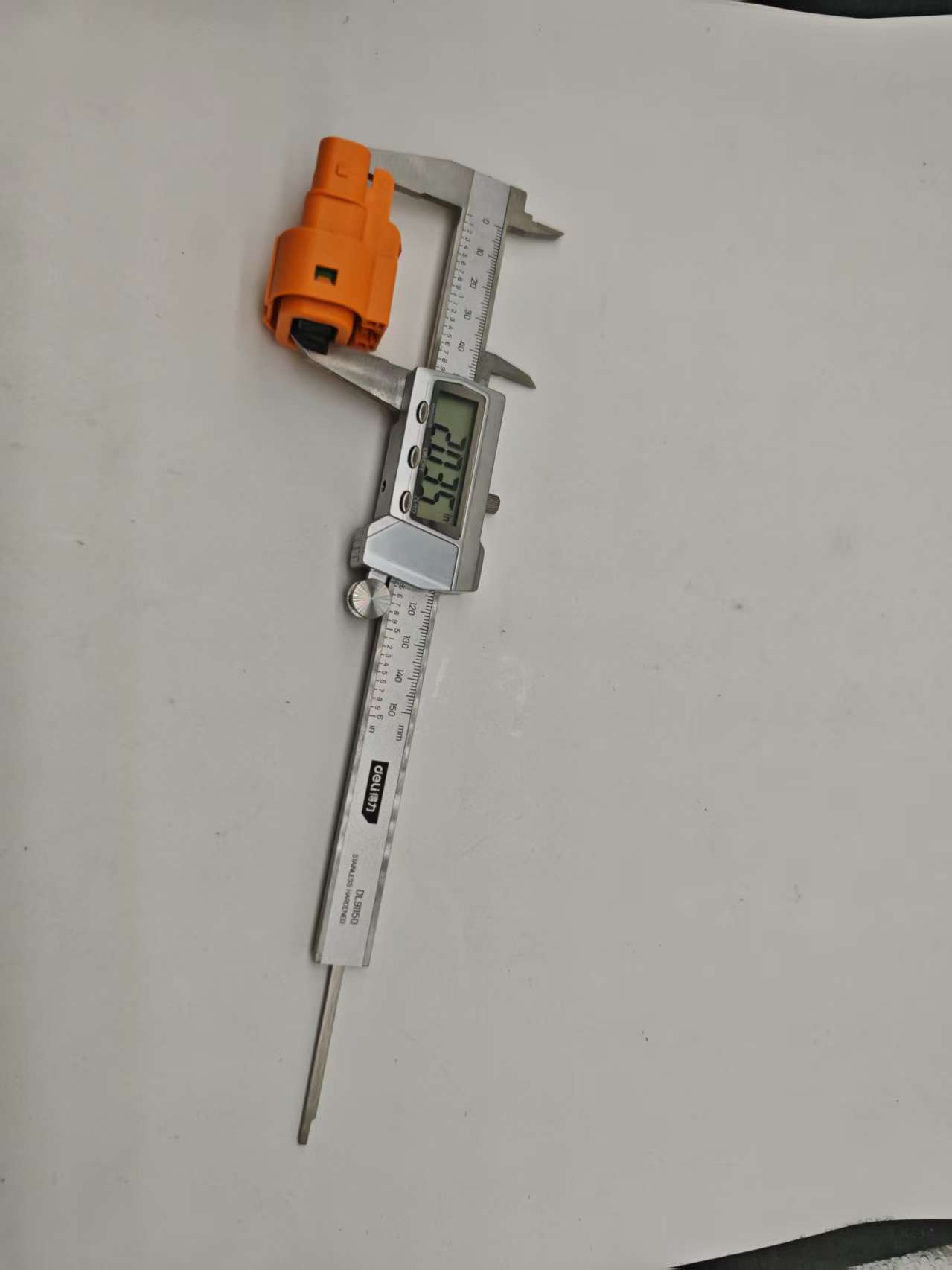
3. Instrument Verification: Precision Re-Inspection with CMM
For high-precision connectors (such as NEV charging interfaces), a ZEISS CONTURA G2 Coordinate Measuring Machine (CMM) is used for full dimensional validation:
- Repeatability ≤0.9μm.
- 40% faster measurement speed with RDS-C5 probe technology.
- Automatically generating inspection reports compliant with the VDA 5 standard.
This step can identify micron-level dimensional deviations; in a recent order for a German customer, it successfully detected a 0.005mm pin-to-pin coaxiality deviation, preventing a signal transmission failure after assembly.
This three-stage protection system achieves closed-loop verification from document compliance to physical conformity, with an interception efficiency 287% higher than traditional traders’ single-sampling model (Source: Suzhou Suqin Electronic 2022 Quality White Paper). Through strict process control, it achieves a quality commitment of 99.92% inbound qualification rate, laying the technical foundation for the risk interception cases detailed in the following sections.
III. Risk Avoidance Case Study: Sealing Ring Material Failure Interception
In a Q2 2023 supplier inbound inspection, Suzhou Suqin Electronic’s quality engineers used a material composition spectrometer to discover that the actual temperature resistance coefficient of a batch of EPDM sealing rings deviated from the technical agreement. Data showed: the supplier’s material report indicated a temperature range of −45∘C to 150∘C, but the actual low-temperature embrittlement point was only −35∘C (tested according to ISO 2928). This material failure could lead to sealing failure in NEV charging interfaces in cold environments, posing a risk of coolant penetration.
The handling process for this incident fully reflects the IATF 16949 risk management logic:
- Immediate Freeze Mechanism: Activating the “Non-Conforming Product Control Procedure” to physically isolate 380 boxes of the affected connectors.
- Root Cause Analysis: Launching an 8D investigation with the supplier’s quality team to pinpoint the rubber compounding process parameter deviation.
- Corrective and Preventive Action (CAPA): Upgrading the sealing material testing item to a Level 4 Control Characteristic (CQC-16949-2022 classification standard).
- Customer Risk Mitigation: Proactively issuing a “Supply Chain Quality Alert Notice” to 12 customers who purchased this model.
The results of this incident handling include:
| Metric Dimension | Status Before Action | Post-Action Result |
| Cost of Quality | Potential Recall Loss $2.8M | Actual Loss $15K |
| Customer Trust | 3 new customers in evaluation period | Added 5 Strategic Cooperation Agreements |
| Process Improvement | Conventional detection items | Added XRF Material Spectrometry |
Through this incident, Suzhou Suqin Electronic elevated its sealing system testing standard to the vehicle-grade AS608 certification requirement, saving downstream customers an average of 42 hours per supplier in quality audit labor. This proactive risk interception capability is the key manifestation of the trader’s differential value in the supply chain.
IV. Efficiency Optimization Case Study: Rapid Matching of NEV High-Voltage Connectors
In the NEV industry, the selection of high-voltage connectors involves cross-verification of 17 key parameters, including voltage withstand (≥600V), sealing level (IP67 and above), and vibration conditions (20−2000Hz). Suzhou Suqin Electronic has compressed the traditional selection cycle from 8 weeks to under 72 hours by building a “Demand-Resource-Verification” Three-Level Intelligent Matching System. The core mechanism of this system is:
Real-time Demand Analysis Engine
By importing customer-provided application data (e.g., motor compartment working temperature range, wire harness topology), the system automatically generates a parameter weight matrix compliant with ISO 19642, prioritizing models in the supplier directory that have passed TÜV Rheinland high-voltage electrical performance certification.
Dynamic Resource Matching Algorithm
Using a multi-objective optimization algorithm, the system generates 3 alternative solutions based on 3,200 sets of engineering parameters in the connector database (including contact impedance, mating cycle life curves, material CTI values). For example, a customer requiring a liquid-cooled charging gun connector for an 800V platform was matched with 3 solutions from IATF 16949 certified suppliers within 47 minutes.
Trilateral Collaborative Verification Process
For the locked-in solution, a trilateral video verification is initiated: the customer’s engineer confirms the specifications online, the supplier demonstrates real-time test data (e.g., temperature rise curve records), and Suzhou Suqin Electronic’s quality team simultaneously reviews the PPAP documents. This model successfully reduced the sample verification cycle for a major OEM’s ADAS system power terminal matching project from the conventional 45 days to 9 working days, cutting development costs by 62%.
Actual data shows that the system’s application reduces customer procurement departments’ ineffective technical communication by 83% and increases the efficiency of new project BOM (Bill of Materials) locking by 4.7 times. In 112 high-voltage connector projects executed in 2023, 94% achieved compliance on the first match, validating the technical penetration of the intelligent supply chain collaboration system.
Conclusion: Building a Trusted Supply Chain Quality Service Platform
By systematically integrating the IATF 16949 standard into its trading service processes, Suzhou Suqin Electronic’s quality performance indicators have shown breakthrough improvements: supplier quality qualification rate exceeds the 99.8% benchmark, customer acceptance failure rate is 85% lower than traditional procurement, and procurement cycles are compressed to 60% of the industry average. The deeper value behind this data is that its created “Quality Firewall” system has successfully transformed the trader’s role from a passive circulation intermediary to an active value creator. When industry data indicates that quality defects in automotive connectors lead to recall costs of up to $8 million per incident (US NHTSA 2023 report), this service model provides a quantifiable risk buffer for the industry value chain. It proves that through professional supplier pre-screening, all-dimensional inbound verification, and dynamic optimization mechanisms, a trader is fully capable of building a quality assurance capability that is even more robust than single direct sourcing.

Frequently Asked Questions (FAQ)
1. Is a trader’s quality control more reliable than direct sourcing from a factory?
Suzhou Suqin Electronic’s supply chain management system ensures reliability that surpasses typical factory direct sourcing through three mechanisms: First, supplier qualification requires passing a 17-point scorecard audit including FMEA and Control Plans; second, inbound inspection uses an AQL sampling plan (e.g., AQL 0.65 for critical dimensions) that is higher than the automotive industry norm; finally, key categories are subject to quarterly supplier quality performance ranking. According to ASQ (American Society for Quality) data, this system elevates supplier batch qualification rates from the industry average of 96.2% to 99.8%. This systematic control capability allows the trader to effectively mitigate the quality fluctuation risks of a single factory.
2. How are quality deviations found during inspection handled
A graded response mechanism is implemented for quality deviations:
- Class A Defects (Safety-critical): Immediate batch freeze and root cause analysis completed within 72 hours.
- Class B Defects (Functional): Suspension of supplier’s supply privilege, requiring submission of CAPA within 7 days.
- Class C Defects (Aesthetic): 100% full inspection and recorded in the supplier’s annual performance score.
2023 data shows that this mechanism successfully intercepted 12 potential quality incidents, including a terminal plating thickness deviation event for a German Tier 1 supplier, avoiding customer production line downtime losses exceeding $3 million.
3. Can you provide the original IATF certificate for the supplier?
Suzhou Suqin Electronic adheres strictly to automotive industry transparency guidelines:
- Provide an official verified copy of the supplier’s IATF 16949 certificate (with the certification body’s e-signature).
- Monthly updates to the certificate validity status database.
- Launch a pre-warning audit process for certificates expiring within 60 days.
In accordance with IATF regulations, companies have the right to view the certification status of their direct suppliers. We have established a digital certificate management system for real-time query of the certification details of our partner factories via the customer portal.
4. How are customized inspection standards set for special working conditions?
A three-stage customized solution is implemented for special working condition requirements:
| Stage | Inspection Dimension | Execution Standard |
| R&D Verification | Material resistance, failure mode | ISO 16750-4 (Road vehicles electrical environment test) |
| Mass Production Control | Process capability index | PPAP Submission Level 3 standard |
| Batch Inspection | Extreme condition simulation | Customer customized AQL scheme |
For example, for a NEV customer requiring a 2000V high-voltage connector, we deployed a contact resistance tester (accuracy ±0.05mΩ) with a high-temperature/high-humidity test chamber (85∘C/85%RH), elevating the inspection standard to the IEC 60512-99-002 specification.
Post time: Oct-11-2025